
News
Despite the damage to Russia’s Black Sea Fleet, intelligence indicates that an airbase attack close to Moscow may be of greater concern to military commanders.


In recent times, Russia’s Black Sea Fleet has faced its fair share of challenges, both geopolitical and strategic. From international tensions in the Black Sea region to concerns about the fleet’s aging vessels and maintenance issues, there are growing uncertainties about its operational capabilities. However, recent intelligence reports suggest that military leaders in Russia may be more worried about potential airbase attacks near Moscow than the issues plaguing the Black Sea Fleet.

The Black Sea Fleet has long been a symbol of Russian naval power in the region. Based in the strategic port city of Sevastopol in Crimea, it plays a crucial role in Russia’s defense and power projection capabilities in the Black Sea. However, the fleet has not been immune to the geopolitical turmoil that has engulfed the region, particularly since Russia’s annexation of Crimea in 2014.
One of the primary challenges facing the Black Sea Fleet is the deteriorating relationship between Russia and NATO. The Black Sea has become a hotspot for tensions between Russia and Western powers, with increased military activity, close encounters between naval vessels, and disputes over territorial waters. NATO’s presence in the Black Sea has raised concerns in Moscow, prompting Russia to bolster its naval assets in the region.
Additionally, the aging nature of many of the fleet’s vessels has raised concerns about its operational effectiveness. Many of the ships in the Black Sea Fleet date back to the Soviet era, and maintaining and modernizing them has become a significant challenge. This has raised questions about the fleet’s ability to respond to modern naval threats effectively.
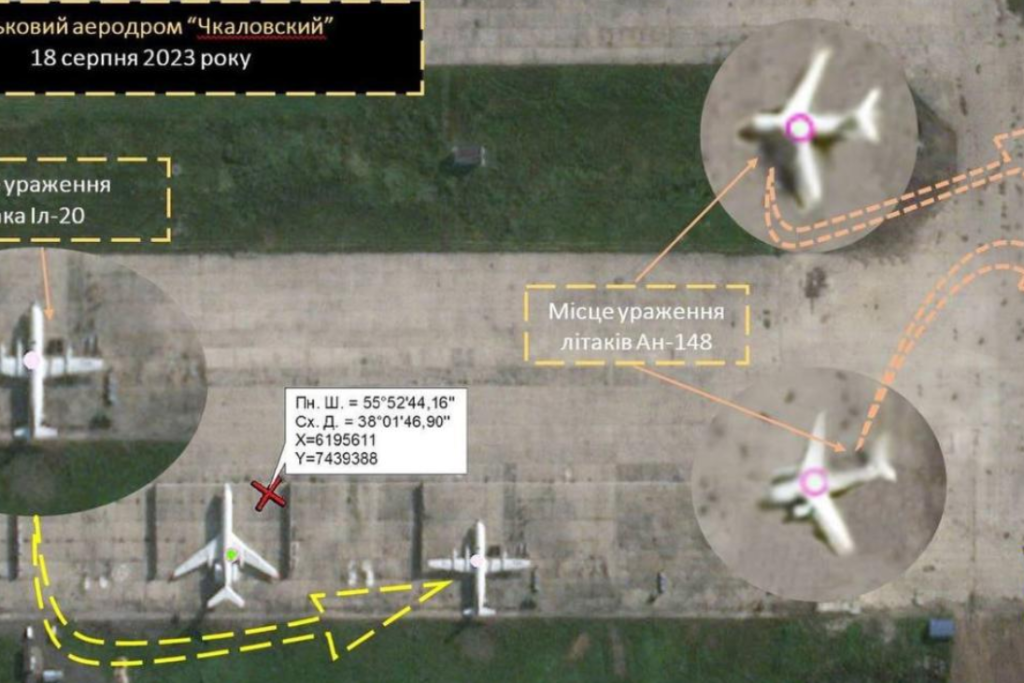
Despite these challenges, recent intelligence reports indicate that Russian military leaders may be more worried about the potential for airbase attacks near Moscow. The idea of an attack on Russian soil, particularly in or near the capital city, is a deeply concerning prospect for the Kremlin. It is believed that such an attack could have a devastating impact on Russia’s military infrastructure and command capabilities.
The concern over airbase attacks is not unfounded. Modern warfare has evolved significantly, and military operations no longer rely solely on conventional ground or naval forces. The emergence of advanced unmanned aerial vehicles (UAVs), cruise missiles, and precision-guided munitions has made it possible for adversaries to target critical military infrastructure deep within a country’s territory.
The conflict in Ukraine, which has been ongoing since 2014, has served as a testing ground for new military technologies and tactics. Ukraine’s use of drones, particularly in the conflict in eastern Ukraine, has showcased the potential of UAVs in modern warfare. This has not gone unnoticed by Russian military planners, who are undoubtedly concerned about the vulnerability of their airbases.
To mitigate this threat, Russia has been investing in anti-aircraft defenses, electronic warfare capabilities, and the development of its own UAVs. The Russian military has also been conducting exercises aimed at countering drone threats and improving the protection of its critical military infrastructure.
In conclusion, while Russia’s Black Sea Fleet faces its own set of challenges, including geopolitical tensions and aging vessels, recent intelligence reports suggest that Russian military leaders may be more worried about the potential for airbase attacks near Moscow. The evolving nature of modern warfare, with the increasing use of UAVs and precision-guided munitions, has highlighted the vulnerability of military infrastructure deep within a country’s territory. Russia’s efforts to counter this threat reflect the changing dynamics of military conflict in the 21st century, where airbase attacks have become a significant concern for even the most powerful nations.

