Nigeria
Optimism Grows as Nigeria–U.S. Partnership Refocuses Global Counterterrorism Efforts on the Sahel


Published
4 months agoon
By
dplanatenews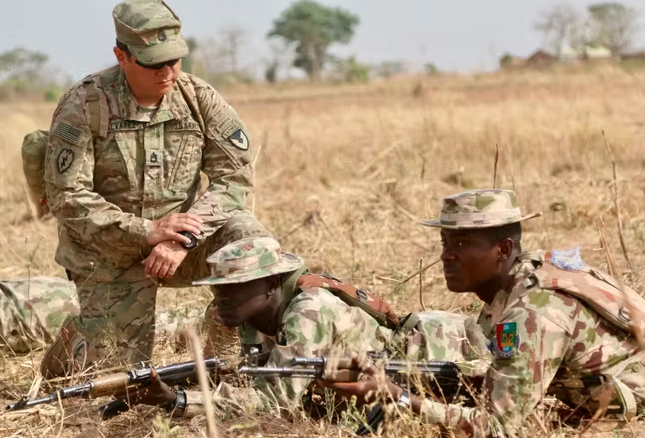
As the global war on terror evolves, Africa has emerged as its new epicenter, underscored by recent gains in Nigeria’s counterterrorism campaign.
Recent security developments suggest that the United States is shifting greater attention from the Middle East to Africa in its counterterrorism strategy, with Nigeria playing a pivotal role as a strategic partner in efforts to combat ISIS and Al-Qaeda-linked groups across the Sahel and Lake Chad Basin.
The focus of global terrorism, once firmly rooted in Iraq and Syria, is now shifting, according to recent intelligence assessments.
Intelligence assessments suggest that ISIS command networks have shifted toward the Lake Chad Basin, while Al-Qaeda-linked factions have deepened their foothold across the Sahel, creating one of the most unstable security zones in the world.
As insurgent groups expand their footprint across the region, Burkina Faso, Mali, Niger and Nigeria have emerged as key battlegrounds. Yet military-led governments in Mali, Burkina Faso and Niger have complicated regional security coordination, weakening the collective fight against terrorism.
Analysts believe the United States is intent on curbing the growing influence of extremist organizations across the region.
Washington fears that vast ungoverned areas across Africa could become launchpads for ISIS and Al-Qaeda operations aimed at American targets and interests.
Beyond security considerations, the United States is also focused on securing access to strategic resources, including premium crude oil from the Gulf of Guinea and critical minerals from surrounding regions. These resources provide alternatives to Middle Eastern and China-dominated supply chains, while supporting broader efforts to counter growing Chinese and Russian influence in Africa.
The region is reportedly seeing a substantial escalation in American military operations, with sustained air missions focused on disrupting ISIS networks in the Lake Chad Basin, according to security sources.
The renewed campaign appears to echo previous American operational approaches used in the Middle East.
In 2019, the United States unleashed a B-52 strike on an ISIS logistics and training base hidden on an island in Iraq’s Tigris River, dropping over 36,000 kilograms of bombs and wiping out the enclave.
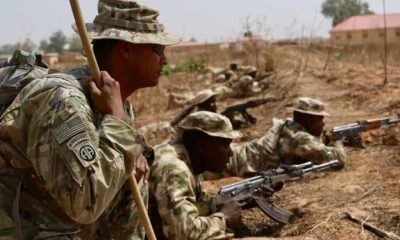
A comparable level of counterterrorism intensity is now emerging in Africa following recent joint U.S.–Nigeria military operations, which targeted militant enclaves in Sokoto during the 2025 Christmas period and later in Metele, Borno State, where airstrikes reportedly killed ISIS’s global deputy leader, Al-Minuk.
The operations signal a major turning point in Nigeria’s security partnership with the United States.
Once viewed in Washington with deep suspicion over human rights and governance concerns, Nigeria has gradually restored trust through sustained intelligence sharing, military cooperation, and coordinated counterterrorism efforts.
According to military sources, security forces have recorded additional gains against Boko Haram and ISWAP elements in the North-East and Lake Chad Islands, including the reported neutralisation of multiple insurgent commanders during recent offensives.
In Nigeria, the growing U.S. military footprint, often described in humanitarian and protection-focused terms, also aligns with wider strategic objectives. It offers Washington a forward position to observe and respond to the shifting insurgency dynamics across the Sahel and Lake Chad Basin, where extremist networks continue to evolve and threaten regional stability.
In spite of the military victories, Nigeria’s internal security crisis has continued to deepen.
Across the country, ransom kidnappings have continued to escalate at an alarming pace.
Educational institutions, markets, worship centres, and major highways are facing growing security threats, as communal clashes, separatist agitation, banditry, herder–farmer disputes, and economic sabotage persist in destabilising multiple regions.
Austen Pabor, a corporate security and regional risk adviser, says terrorism and extremism have developed together over time, leading to armed conflict and global destruction, with the United States involved in stabilisation efforts in affected countries.
“This shift in global counter-terrorism attention toward Africa reflects how threats can evolve and where the threat is evolving. For Nigeria, this presents an opportunity to strengthen intelligence sharing, regional security cooperation, and counter-terrorism capabilities, provided the country views it through this lens and takes advantage of the potential relationships.
“However, military action alone will not secure lasting stability in Nigeria. The real solution lies in combining targeted security operations with stronger border management, effective governance, disruption of terrorist financing, and the restoration of state authority in underserved communities,” he suggested, adding that terrorist groups thrive where governance is weak.
According to Pabor, sustainable security depends not only on neutralising the threat but also on removing the conditions that allow it to regenerate.
“I am hopeful that if the Nigerian government explores the pros of this possibility, where intelligence, surveillance, border strengthening, etc., are shared with the common goal of combating terrorism, it will certainly be a conversation on the front burner,” he stated.
Security expert Matthew Ibadin also aligned with the assessment that the Sahel region accounts for a large proportion of prevailing insecurity challenges.
He attributed this to porous borders, noting that Nigeria’s frontier in the Sahel is highly porous, which facilitates the movement of террористs into the country.
He argued that even the full deployment of national military strength in the Sahel would be unable to contain the flow of terrorists entering through porous borders.
“It is time for the Nigerian government to fortify our borders and dismantle the current security architecture in the country.
“This is because we are operating under a single-digit security architecture, where the police are on the exclusive list. The federal government owns the police, so we have a centralised police force. It means that the federal government owns the army, navy, air and the police,” he pointed out.
He said security challenges cannot be fixed without devolving power, which he described as the only solution.
“We should allow state police by taking policing from the exclusive list to the concurrent list. Let state governments be able to formulate and undertake policing tasks in their states, so we can hold state governors accountable when there are issues in their states” Ibadin said.
Ibadin stressed that the police can effectively combat pervasive insecurity if they are properly empowered, trained, and equipped.
meanwhile, reports indicate that ISWAP has closed its ‘hijrah’ migration routes for foreign fighters, acknowledging that established entry pathways into Nigeria have become increasingly hazardous as a result of sustained military pressure from AFRICOM and Nigerian forces.
An intelligence report from Lake Chad security analysts says the group acknowledged that routes used for fighters, weapons, and supplies into insurgent areas are now inaccessible.
According to security sources, the development signals increased strain on the group’s logistical infrastructure, with the disruption of these corridors likely to affect recruitment, logistics, and broader operational coordination.
Analysts believe the shutdown of these migration routes is linked to intelligence-driven operations against ISWAP command structures and logistics networks in Borno State and across the Lake Chad region, and have emphasised the need for sustained pressure.
Security analyst and digital communications expert Deji Adesogan noted that the growing shift in U.S. counterterrorism priorities from the Middle East to Africa places Nigeria at the center of efforts against ISIS and Al-Qaeda affiliates in the Sahel and Lake Chad Basin.
According to him, the development may improve Nigeria’s security architecture by deepening intelligence sharing, expanding military cooperation, and providing access to advanced technology in the fight against Boko Haram, ISWAP, and other extremist groups.
“Improved security could also boost economic development by attracting investment, restoring agricultural activities, and promoting regional stability. However, Nigeria may also face increased terrorist threats as extremist groups adapt to growing pressure.
“To maximise the benefits, Nigeria must complement military operations with investments in technology, innovation, education, job creation, and good governance to address the root causes of extremism and build long-term national stability,” he said.
“First, before development, there must be peace. In any situation where crises take the lead, development will be very, very scarce, because how do you even develop when there is no peace?”, Abubakar Sadeeq, a security expert said.
Sadeeq linked insecurity in Nigeria and the broader Sahel to former colonial powers, alleging that they benefit from instability as a means of exploiting Africa’s natural resources.
“You should know that without Africa’s resources, places like France cannot survive, places like Europe cannot survive. So, there must be crises. Those are factors that are creating this insecurity.
“And Libya is just a next-door neighbour where there was a crisis. And after the crisis, there was no proper resolution to cover the movement of arms. Those arms were deployed into some parts of Africa, here, Nigeria, to be precise.
“So, those are the major factors. And until we have those factors curtailed by having a serious strategy, bringing all security experts together to draft a strategy, of course, there will not be peace.