Politics
Electoral Act: INEC insists on compliance as opposition jitters over mandatory e-register

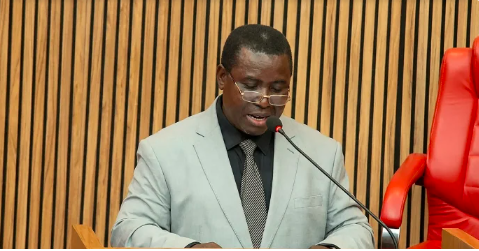
The Independent National Electoral Commission (INEC) has warned political parties against conducting flawed primaries and allowing internal crises to fester, cautioning that such practices could jeopardise preparations for the 2027 General Election.
Prof. Joash Amupitan, the INEC Chairman gave the warning yesterday at the opening of a three-day Technical Review Workshop on the Regulations and Guidelines for Political Parties in Ikot Ekpene, Akwa Ibom State.
INEC further expressed its commitment to ensuring its regulations and guidelines on political parties are enforced to the letter ahead of the party primaries, an exercise it noted always comes with a deluge of intra-party fighting, crises, and the foisting of unpopular candidates, which it added result in either voter apathy or unnecessary litigations.
He said the 2026 guidelines will introduce stricter benchmarks for membership documentation, financial transparency, and the inclusion of women, youth, and persons with disabilities (PWDs).
The INEC Chairman regretted that political parties, rather than being used as vehicles for national transformation, are currently witnessing a disturbing trend of leadership disputes and infighting that threaten to turn them into theatres of permanent strife, saying the commission was ready to address the issues with the new INEC provisions.
Prof. Joash Amupitan said a day spent defending these intra-party disputes in court “is a day diverted from the primary mandate of election planning.”
The workshop, which was supported by the Westminster Foundation for Democracy (WFD), is part of INEC’s efforts to review and tighten its regulatory framework following the enactment of the Electoral Act 2026 and the release of the timetable for the 2027 polls. Primaries for the 2027 elections are scheduled to be held between April 23 and May 30, 2026, under the new revised timetable.
“The quality of internal party democracy has a direct bearing on the credibility of the elections we conduct. Where candidates emerge through opaque processes, the consequences are voter disillusionment and an upsurge in pre-election court cases,” the INEC Chairman said.
NNPP urges the Independent National Electoral Commission to prioritise restoring public confidence over party disputes
THE National Working Committee (NWC) of the New Nigeria Peoples Party (NNPP) in its response said internal party disputes, while very significant, are secondary to the larger crisis of public confidence in Nigeria’s electoral process. The party, while disagreeing with the INEC boss, urged the election body to give more attentions to reforms that restore trust in the votes by the electorate.
Speaking with journalists, Ladipo Johnson, the NNPP National Publicity Secretary, acknowledged that legal battles arising from party disputes can strain INEC’s resources. However, he insisted that voter apathy driven by skepticism over electoral integrity poses a far greater threat to Nigerian democracy.
“While administrative hurdles are real, the greatest cause of voter apathy is not internal party friction; it is the widespread perception that INEC is complicit in subverting the will of the people. Until INEC demonstrates absolute transparency and proves it is an unbiased arbiter, no amount of internal party stability will bring Nigerians back to the polling units” – Johnson said.
Senator Victor Umeh of the Labour Party, representing Anambra Central, echoed the view, stressing that credible elections are essential to restoring citizens’ interest. “The Commission can only resurrect citizens’ interest in elections if it conducts credible elections. The public has lost confidence due to lack of transparency,” he said.
NNPP’s position reflects a growing concern among political stakeholders that strengthening internal party democracy, while important, must be complemented by transparent electoral processes to rebuild trust in Nigeria’s democracy.
Opposition in quandary over mandatory e-register
A week after INEC released the revised timetable for the 2027 general elections, opposition parties are racing against time over the mandatory electronic membership registration introduced under the Electoral Act 2026. This is just as the African Democratic Congress (ADC) warned that the new requirement could narrow the democratic space.
Paramount at the heart of the dispute is Section 77(4) and related provisions of the amended law, which mandate all registered political parties to submit their digital membership registers to INEC, not later than April 2, 2026, as a precondition for participating in the elections.
Political parties are required to maintain a digital register of members and submit it to INEC within a stipulated timeframe under the law. In this new provision, only individuals whose names appear in the submitted register can participate in party primaries, congresses or conventions.
Opposition leaders are now arguing that the timeline is too tight and the provisions too stringent, effectively placing hurdles before parties that may not have the same structural or financial capacity as the ruling party. ADC warned that with barely weeks to comply, the requirement risks shutting out smaller or less technologically prepared parties from the 2027 race.
Other opposition parties, including the Peoples Democratic Party (PDP) and the Labour Party (LP), have also expressed reservations over the implications of the new provisions.
Yesterday, the umbrella body of political parties, the Inter-Party Advisory Council (IPAC), convened a meeting to deliberate on the matter, amid growing anxiety across party lines. The outcome of the meeting was yet to be disclosed as of press time last night.
See Also: INEC raises concerns over trust deficit, seeks Peace Committee support for credible 2027 polls