
News
Nigerian Election Challenges and Why It’s Simple to Manipulate People’s Will

Introduction
The Independent National Electoral Commission (INEC) is the electoral body that is responsible for organizing and conducting elections in Nigeria. INEC was established in 1998 under the provisions of the 1999 Constitution of the Federal Republic of Nigeria. Its mandate is to ensure that elections in Nigeria are free, fair, and transparent and that the will of the people is reflected in the results. However, in recent times, Nigerians have expressed concern about the conduct of elections in the country and have demanded that INEC gives them their mandate. This essay will examine the issues surrounding the conduct of elections in Nigeria, the role of INEC, and the steps that can be taken to ensure that the electoral body fulfills its mandate.

Challenges Facing Elections in Nigeria
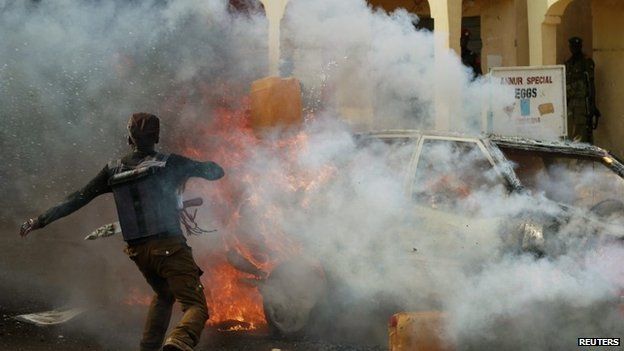
Nigeria is a country that is plagued by several challenges that affect the conduct of elections. One of the major challenges is insecurity. Insecurity has become a major problem in Nigeria, and it has affected the conduct of elections in the country. In many parts of the country, there are pockets of violence, banditry, and kidnapping, which make it difficult for voters to come out and cast their votes. This has led to the cancellation of elections in some areas, which has affected the outcome of the elections.
Another major challenge facing elections in Nigeria is voter apathy. Many Nigerians do not see the need to participate in elections, either because they do not believe that their votes will count, or because they do not trust the electoral process. This has led to a low turnout of voters during elections, which affects the legitimacy of the outcome.
The Role of INEC
INEC has a crucial role to play in ensuring that elections in Nigeria are free, fair, and transparent. The commission is responsible for several functions, including voter registration, voter education, and the conduct of elections. INEC is also responsible for ensuring that the results of elections are collated and announced in a timely and transparent manner.
One of the key functions of INEC is voter registration. The commission is responsible for registering eligible voters, and this is done through the creation of a voters’ register. The voters’ register is used to determine the number of eligible voters in each polling unit, and it is also used to ensure that voters are not registered in multiple locations. INEC is also responsible for conducting voter education to ensure that voters understand the electoral process and their rights and responsibilities as voters.
INEC is also responsible for the conduct of elections. This includes the deployment of personnel and materials to polling units, the accreditation of voters, the voting process, and the counting and collation of votes. INEC is also responsible for ensuring that the results of elections are collated and announced in a timely and transparent manner.
Steps to Ensure INEC Gives Nigerians Their Mandate
To ensure that INEC gives Nigerians their mandate, several steps can be taken. One of the first steps is to address the issue of insecurity. The government must take decisive steps to address the issue of insecurity, particularly in areas where elections have been disrupted in the past. This will help to create a secure environment for voters to come out and cast their votes.
Another step is to address the issue of voter apathy. This can be done through voter education campaigns that are targeted at increasing awareness about the importance of elections and the role of voters in the electoral process. The campaigns should also address the concerns that voters have about the electoral process, and provide information on how INEC is addressing these concerns.
INEC should also take steps to improve the transparency and accountability of the electoral process. This can be done by ensuring that the collation and announcement of results are done in a timely and transparent manner. INEC should also make use of technology to improve the efficiency and accuracy of the electoral process.

